Why Protest?
According to a new book, protest doesn't change public opinion or policy, but it does have a powerful effect on participants

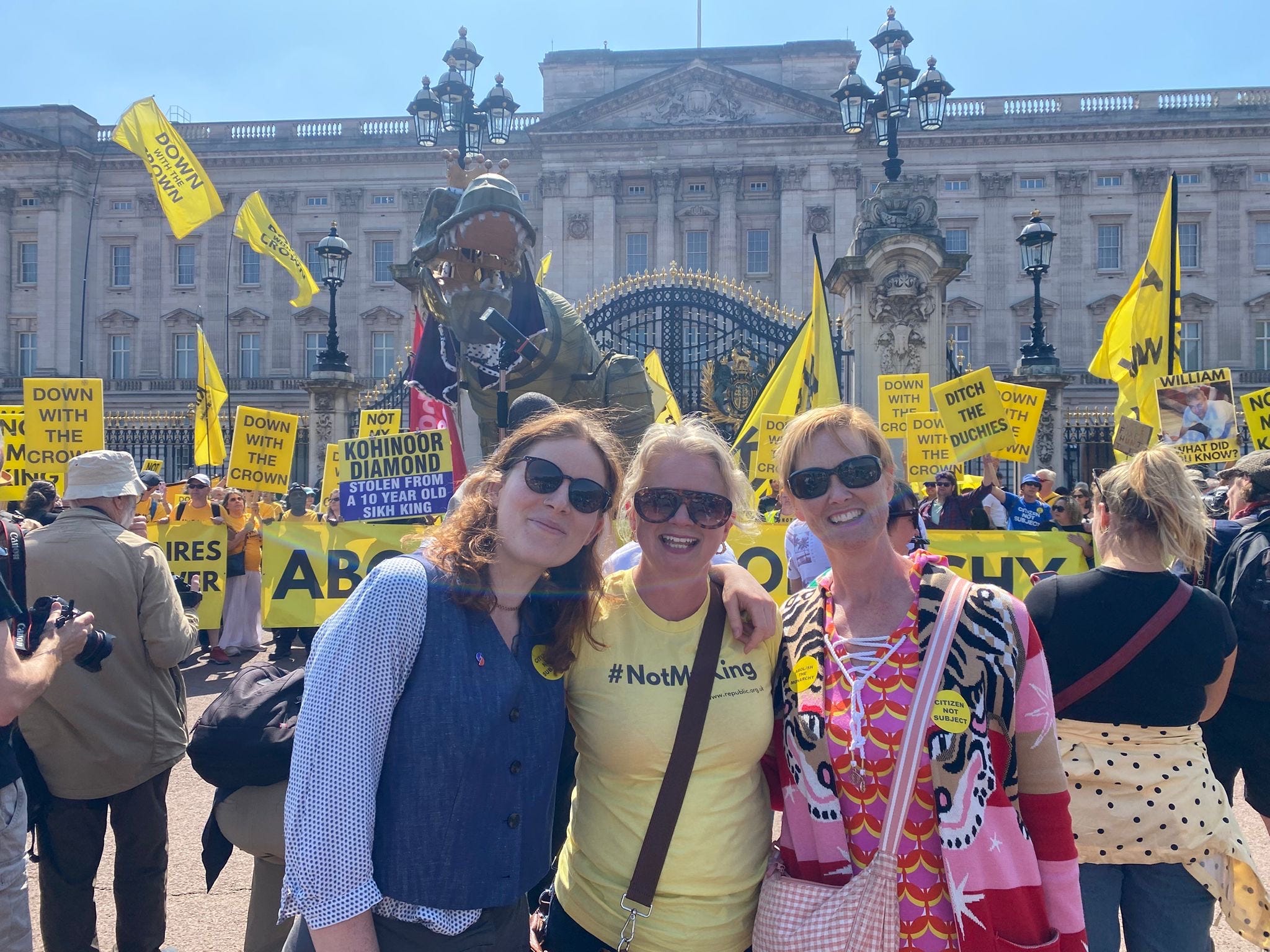
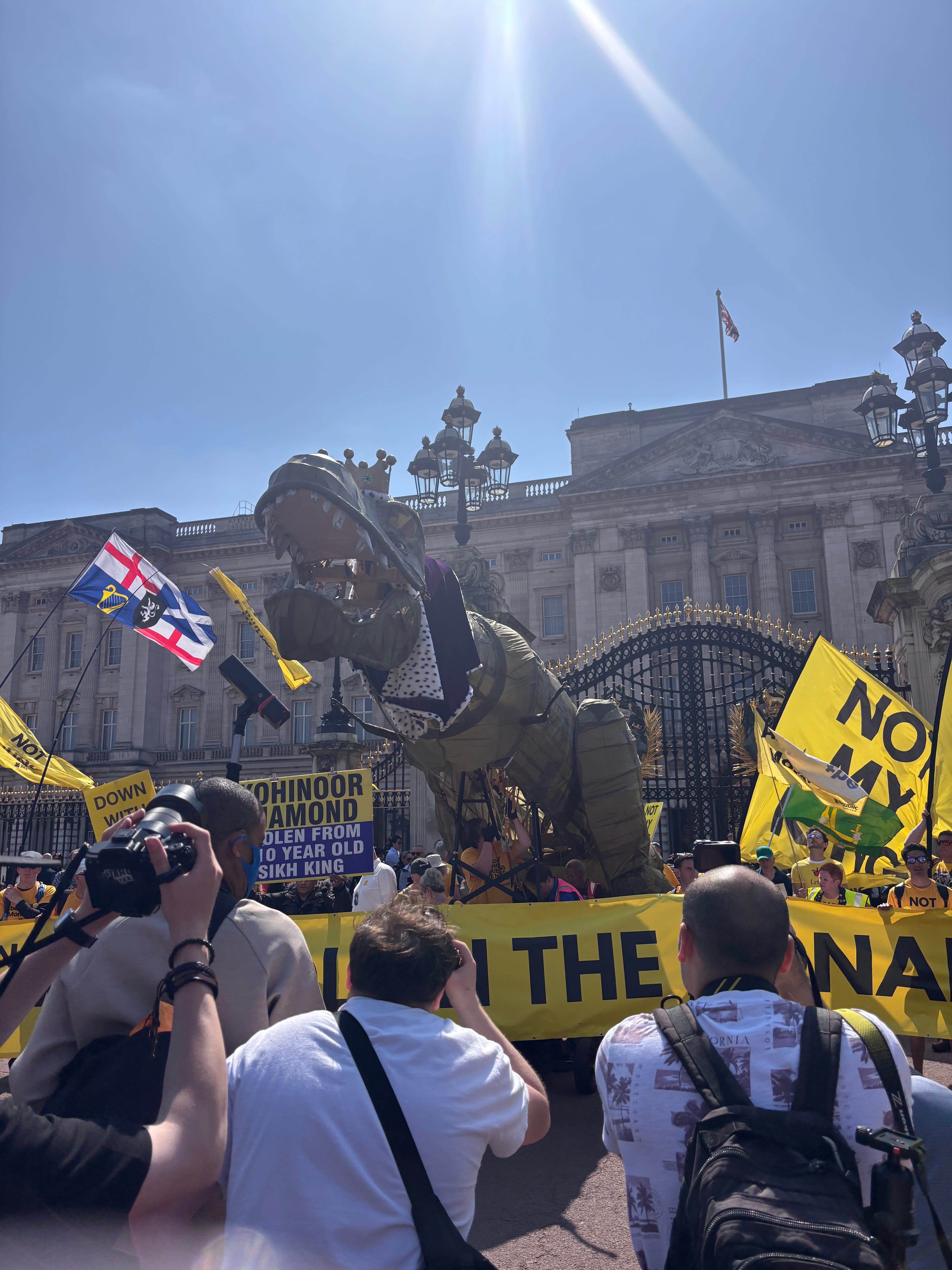
I took part in an anti-monarchy protest last weekend organised by the campaign group Republic. It was a gorgeous day in London and what I most want to tell you about this protest is that it was fun. And I say that as someone who doesn’t like to protest. I’ve only been on three protests in my life and all were in the past ten years. I feel uncomfortable protesting and can’t imagine I’ll every be eager to protest, but these protests generated interesting thoughts and feelings that made more sense to me after reading Sarah Stein Lubrano’s new book “Don’t Talk About Politics”.
First, the protests were more fun than I anticipated. I also felt a sense of camaraderie, intellectual stimulation and power.
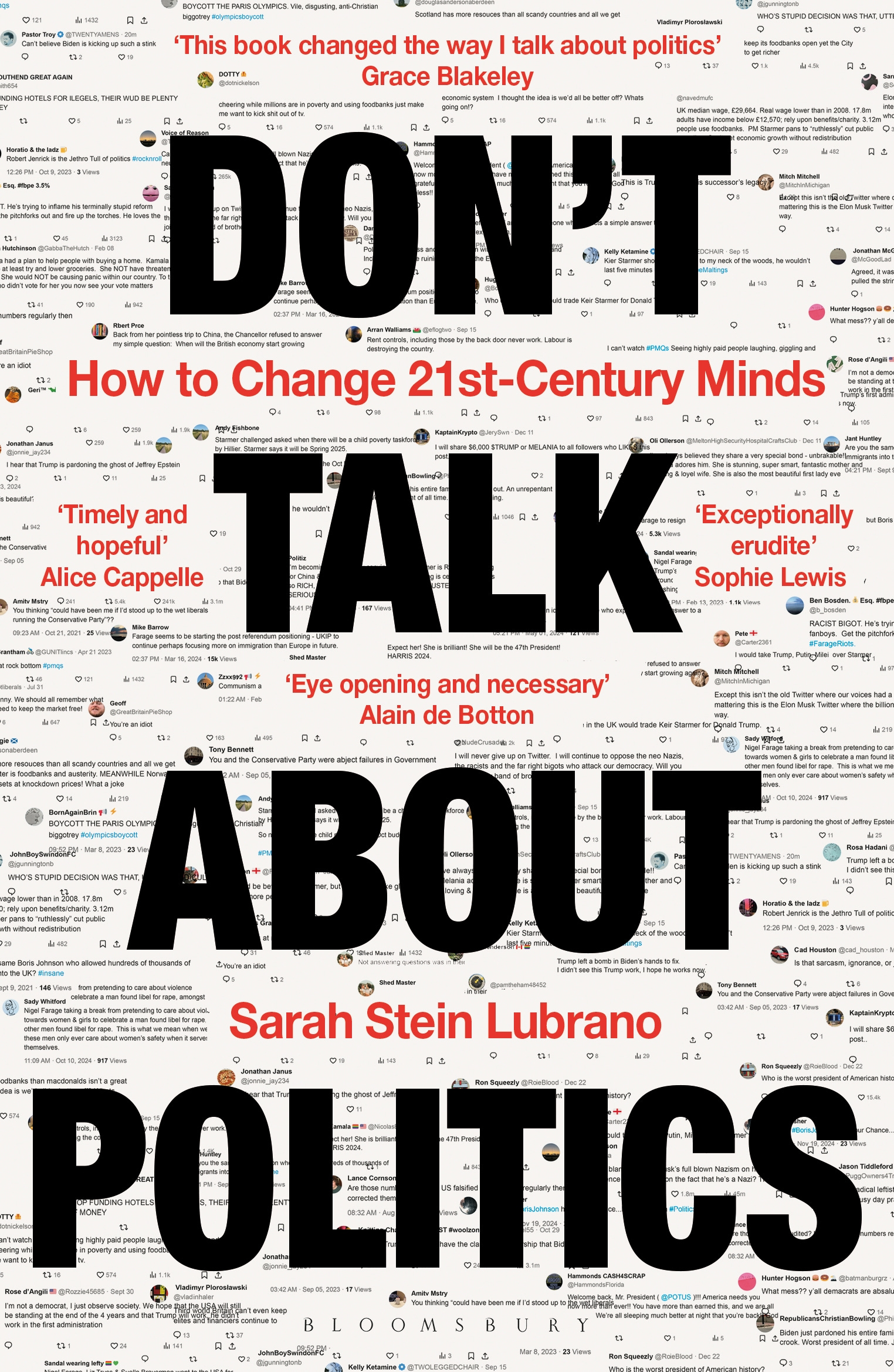
This is no surprise when you understand what is actually going on psychologically at a protest. Lubrano has a whole chapter on protest and political movements that explains the latest social science research. What they show: protests aren’t at all effective at changing public opinion or policy.
For example, Professor Vincent Pons of Harvard’s Business School ran a complex statistical analysis of 14 protest movements from 2017 to 2022 on all manner of topics from climate change to police violence and found that while protests sometimes increased interest and online activity in the short-term, that dissipated after two weeks and had no effect on anyone’s long-term beliefs. The only exception was Black Lives Matter which changed Democrats’ views on racial issues but actually polarised opinion over time. The research isn’t definitive because it’s hard to draw causality conclusions when there are so many factors at play, but for anyone hoping to change public opinion or policy by protesting – the research suggests you put your energy elsewhere.
Protests have very little effect, indeed essentially none at all, on the beliefs of the general public. ~ Sarah Stein Lubrano
Where protests do make powerful changes is in the hearts and minds of the participants themselves. Over and over, researchers find profound effects on those who join protest movements and social movements more broadly. They are often a gateway drug between casual participation and lifelong activism.
According to Lubrano (and after reading her book I’m in agreement) our society has two deeply flawed models of how political ideas work: first, that it is effectively commerce (‘the marketplace of ideas’); and second, that it is war (as in ‘debate’ where there is a ‘battle’ of ideas that results in a ‘winner’ and a ‘loser’).
Research suggests both these bedrock ideas are wrong.
Instead political reasoning is an interdependent, not independent, activity. Our thoughts are formed through our social world and the opportunities we have in that world to act. Our actions and experiences are what form and change our beliefs, often without us even noticing.
This is a revolutionary insight. Action is a fundamental part of reasoning
“If there are not enough opportunities for people to act differently in the world,” she writes, “it is very likely they will end up justifying the world as it is.”
Wait, what? This is huge. It explains the seemingly bizarre phenomenon of women supporting patriarchy, minorities supporting right-wing candidates, or low-income people supporting a billionaire’s political agenda. Or - to take my recent example - why the land-deprived people of Britain support a publicly subsidised monarchy (which still boggles my mind).
It’s called System Justification Theory and it was pioneered by social psychologist John T. Jost. He observed that it is the people most disadvantaged by the status quo who have the greatest psychological need to reduce ideological dissonance. If it feels impossible to change the system, it is easier to change one’s beliefs and so those most oppressed can be the most likely to support, defend, and justify existing social systems, authorities, and outcomes.
As Lubrano writes: There’s something especially perverse in the way that we can see so many people in these studies adapting their beliefs to fit the status quo in order to preserve their sense of agency in the face of their own powerlessness. They learn to like the way things are precisely so they can believe they chose it in the first place.
And this is why protests are useful. Protests change the scope of our political imagination. They show there might be other ways to live. They make what seemed impossible, possible; they give words to what was previously wordless, and they show that you are not alone. Going on a protest is a new action that provides a new experience, a new social network and the chance to learn new skills. Most importantly a ‘good’ protest helps people feel their own agency. That is, feel their own power and that what they do has meaning. All this gives people strength and resilience to do the tough work of facing reality and trying to make it better.
This is why those who become members of protest movements, compared with control groups of similar people who don’t, seem to have greater self-esteem and well-being she writes. This is in line with other research that shows people do better psychologically when they perceive themselves to be active, autonomous and agents for good.
This seems crucial for all campaign groups to understand: Effective organizing involves providing experiences and actions for people and then giving them space and tools to make sense of what they are doing.
Certainly I felt that’s what Republic provided on Saturday. I felt active, autonomous and an agent for good. Plus it was fun.
Not that we need get rid of debate and discourse (after all, why be a writer if you don’t believe argument matters?), but I now see the point of organising even small political actions.
Taking such actions together can be joyful, compelling, and change the way people think about the world, far more than an abstract debate. So if you want to change people’s minds, the best advice is to think about how you can change their lives. What new experiences and actions can you bring into their world?